Published on · 3 min read · Ler em Português
The importance of imagining the future
People say we must live now, leave the past behind and wait for the future to happen.
- Science Fiction
- Fiction
- Future
- Politics
- Thinking
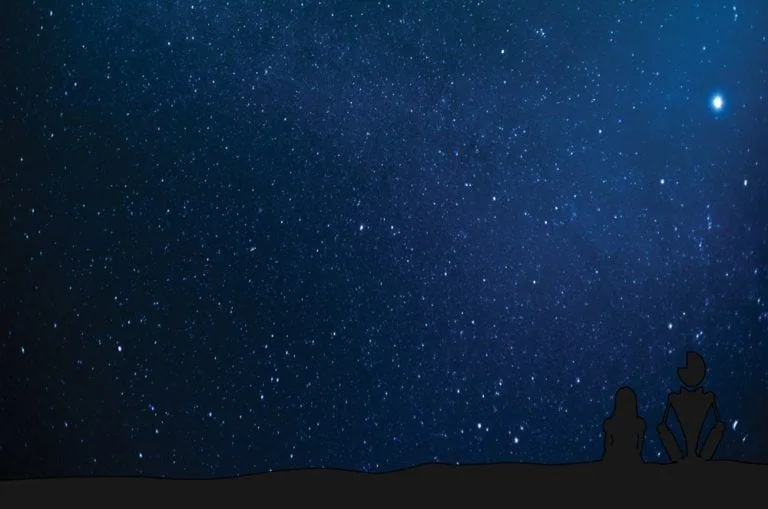
People say we must live now, leave the past behind and wait for the future to happen. There is a lot of truth in this advice, especially for the most anxious. But without thinking about our history, we are unable to learn from the past, and without imagining the future, as Science Fiction does, we can not decide where we want to go. That’s the question, isn’t it? Where do we want to go?
Everyone has thought of tomorrow, be it the election of the next president, the renovation of the house, the end of college, the championship final. The future is part of our lives, but we are almost always restricted to our personal goals. When was the last time you stopped to think about what the world will be like?
It seems distant from our reach, but it’s an exercise as important as planning to go to college or to have a child. It’s also easy, give it a try.
Do you imagine cities full of cars, as the automotive industry has convinced us for decades? High walls, that push the poor and unwanted minorities away from the “good” population? Violence and war? Air conditioners and desalinisers to survive in desertified tropics? Paradises on distant planets that only the rich can afford?
Or do you imagine a future with a lot of diversity, of people living without conflict or poverty? Nice temperature, plenty of clean water for drinking, swimming, and irrigating crops? More gardens, trees, urban agriculture and less asphalt? No traffic jams, pollution and trash? Yes, because we produce a lot of garbage.
Whether it’s by fearing what we are doing to the world, or by unjustified optimism, the important thing is to imagine the future. Only those who have imagined the safe and ecological cities they dream of living in some day, can fight for more stringent legislation for the polluting industry, a tax system that does not concentrate income, more budget for Science, Health and Education.
Maybe I need to rephrase the starting question. Are we willing to pay the price for a better world? Or are we going to insist on our convenient mistakes?
To answer this question, Science Fiction uses literature, film and even radio, popularizing the exact sciences and humanities. Through the most improbable futures or not, their authors explore the benefits and dangers of different forms of government and control, of social classes and discrimination, ethics and science.
There are so many possibilities and contributions that a person could never imagine alone. This is the wonder of diversity, the source of inspiration for us to define our priorities today, but it’s no use if people do not absorb content and become able to think for themselves. What is lacking in the world are not thinkers, but readers and dreamers.
After all, when will we give up our national supremacy and armies to build a world government, as Isaac Asimov imagined? When will we increase control over multinationals and governments, not to fall into a dystopia of Philip K. Dick or William Gibson?
More importantly, when are we going to distribute the riches to make the world a paradise as Arthur C. Clark’s , and overcome our prejudices, to build a diverse and multicultural society, far from Margaret Atwood’s Handmaid’s?
It’s not too late to start doing what we’ve been dreaming of for so long.