Published on · 3 min read · Ler em Português
The fragility of the offense
There are words that offend just by being spoken.
- Hate
- Offense
- Society
- Conflict
- Humility
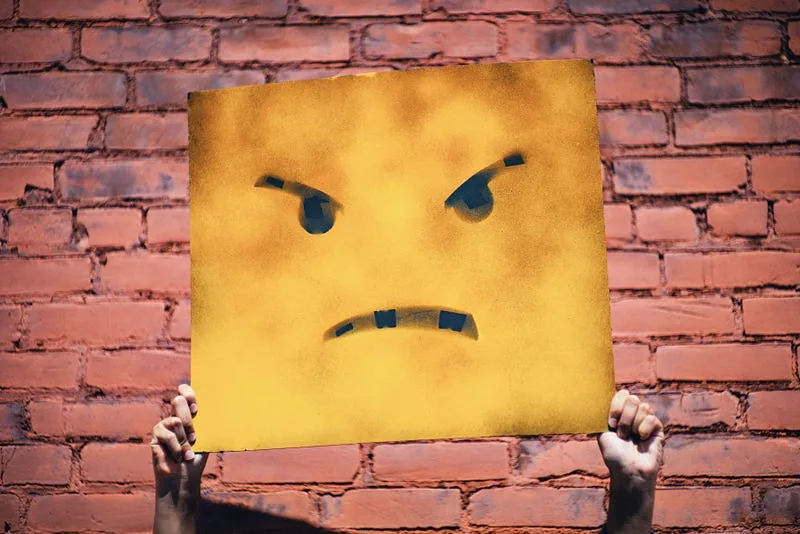
There are words that offend just by being spoken. The word itself, written on a piece of paper, has no power. It’s in the people the supernatural ability to speed up their heartbeat, flush their faces and bring passive bodies into conflict.
More than in people, in intentions, because even the most serious offense, when pronounced with malice by friendly lips, is nothing more than a harmless provocation reserved for the intimate.
Not only do words have this power, since there are also gestures and even a simple expression of contempt is capable of hurting. Attitudes also offend, and if you think about it, human beings are extremely sensitive.
This is because the offense is more complex than it may seem. Animals have emotions, but are they capable of being offended? To hurt, off course, to scare, too, but to offend?
The offense requires an understanding of the other that an animal may not have. As social as some species are, such as dogs and their packs, the offense hardly makes sense within their relationships (and maybe that’s why we like them so much). There are intimidation and power games, as in any society, but little of the complex offense and its intention to hurt, not physically, but socially.
Socially, because an offense is twice as serious if it’s delivered before witnesses. It may not even have value without accomplices, as it’s precisely a way of exposing the other and overcoming them. Offense is a tool of oppression.
Demonstrations of strength are primitive and brutal, with the use of muscles, fangs and claws. Offense, on the other hand, is a socially accepted and relatively civilized form of conflict. Blood or teeth are not lost, but status. That is why someone who is unable to respond to an offense becomes the victim of many more. It’s the weak, which others exploit to ascend socially.
The offense is equivalent to physical strength because it reveals the most fragile, those unable to fight back and stand out, who are more easily affected and demoralized. Not enduring an offense is the public demonstration that the other is is able to reach you. Almost a compliment for those who offend.
Returning an offense with a punch to the stomach is a perfect example of the transitional phase we are in. That is why it’s possible to be “civilized” as a girly girl of a teen show, and at the same time, brute as a savage.
Not losing your dignity in the face of an offense, on the other hand, is the public demonstration that the other is unable to reach you. As if your nose were above them, in the distant clouds that cover the sky. A giant, far enough away that your eyes don’t see it and your ears don’t hear it.
An even bigger giant is one that does not need to offend to intimidate. His pose and his intelligent and indisputable arguments are more than an offense. They open up the mediocrity and stupidity of the other, as well as of everyone involved in an intellectual struggle.
But it’s as the Brazilian philosopher Mario Sergio Cortella says “knowledge serves to enchant people, not to humiliate them”. After all, exposing someone else’s stupidity is just an even more civilized level of conflict. It’s above the offense, but it’s a sophisticated form of cockfight.